

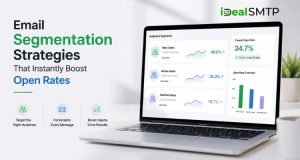
Email inboxes are full, and general emails often get ignored. The main reason some emails get opened while others don’t is simple, relevance. When you use the right email segmentation strategies, you can send the right message to the right person instead of sending the same email to everyone. This makes your emails feel more personal and useful, which increases the chances that people will open and engage with them.
Instead of guessing what your audience wants, segmentation helps you understand their behavior, interests, location, and past actions. You can create different groups (segments) like new subscribers, active users, or past customers, and send each group content that matches their needs. This improves user experience and builds stronger trust with your audience over time.
Brands that use email segmentation see better results, like higher open rates, more clicks, better conversions, and stronger return on investment. It also helps reduce unsubscribe rates because people receive content that actually matters to them. In this blog, you’ll learn the most effective email segmentation strategies, real examples, and simple ways to apply them. By the end, you’ll be able to create smarter email campaigns that connect better with your audience and drive more results for your business.
Table of Contents
What Are Email Segmentation Strategies and Why Do They Matter?
Email segmentation means dividing your email list into smaller groups based on specific details like location, interests, purchase history, or how users interact with your emails. Instead of sending the same message to everyone, segmentation helps you deliver more relevant and personalized content. This makes your emails feel more useful to the reader and increases the chances of engagement.
When done correctly, email segmentation improves overall campaign performance. People are more likely to open, read, and act on emails that match their needs. It also helps build trust, improve customer experience, and increase long-term loyalty. Without segmentation, even good email content may fail because it reaches the wrong audience at the wrong time.
Why Email Segmentation Matters:
- Helps send the right message to the right audience
- Increases open rates and click-through rates
- Improves conversions and overall ROI
- Reduces unsubscribe and spam complaints
- Builds stronger relationships with subscribers
- Makes emails feel more personal and relevant
What Makes a Strong Segmentation Strategy:
- Demographic data (age, gender, location)
- Behavioral data (clicks, opens, website activity)
- Purchase history and buying patterns
- Engagement level (active vs inactive users)
- Customer journey stage (new, returning, loyal)
- Interests and preferences
By using these strategies, businesses can move beyond generic campaigns and create smarter, more targeted communication. This not only improves results but also gives brands a strong competitive advantage in email marketing.
Read More– 10 Best Email Marketing Service Provider in Nigeria
Types of Email Segmentation Every Marketer Should Know
Understanding foundational email marketing segmentation strategy types helps marketers build smarter campaigns. These proven models structure all future segmentation work.
1. Demographic Segmentation
Demographic segmentation groups subscribers by age, gender, income level, or job title. This foundational email segmentation strategies model works well for brands whose products align with specific life stages or professional roles
2. Behavioral Segmentation
Behavioral segmentation tracks subscriber actions like pages visited, links clicked, and purchases made. It is one of the most dynamic email segmentation strategies because it responds to real activity rather than static assumptions.
3. Geographic Segmentation
Geographic segmentation targets subscribers by country, region, or city. This email marketing segmentation approach is ideal for local promotions, event invitations, and region-specific offers that require location-aware messaging.
4. Psychographic Segmentation
Psychographic segmentation groups subscribers based on values, interests, and lifestyles. Applying this within a broader email marketing segmentation strategy helps brands connect on a deeper, more personal level with each audience.
5. Layered Segmentation
Combining two or more of these models creates a layered email segmentation strategy approach that delivers precision at scale, giving marketers the ability to target micro-segments with highly relevant, conversion-focused messaging.
Read More– Top 10 Bulk Email Service Providers in USA
Advanced Email Segmentation Strategies to Elevate Campaign Performance
Once foundational segmentation is in place, advanced email segmentation strategies take performance to the next level. These approaches use richer data and smarter logic to deliver hyper-relevant experiences. Use these advanced email segmentation methods to separate top-performing brands from average senders.
Lifecycle Stage Segmentation
Grouping subscribers by their position in the customer journey, whether new leads, active buyers, or lapsed customers, is one of the most powerful email segmentation strategies for driving timely, context-aware messaging that converts.
RFM Segmentation (Recency, Frequency, Monetary)
RFM segmentation scores customers based on how recently they purchased, how often they buy, and how much they spend. This advanced email segmentation model helps brands identify high-value customers and re-engage those at risk of churning.
Predictive Segmentation
Using historical data and machine learning signals, predictive segmentation anticipates subscriber behavior before it happens. This is one of the most sophisticated email segmentation strategies and delivers highly personalized messaging at scale.
Engagement-Based Segmentation
Sorting subscribers into active, semi-active, and inactive groups lets marketers send re-engagement campaigns or sunset campaigns strategically. This email segmentation approach protects sender reputation and keeps lists clean.
Purchase Intent Segmentation
Tracking cart abandonment, product page visits, and wishlist activity reveals purchase intent. Sending targeted follow-ups based on this advanced email segmentation strategy data recovers revenue that would otherwise be lost without follow-up.
Read More- 10 Ways to Improve Email Deliverability for Transactional Emails
How to Build an Email Marketing Segmentation Strategy: Step by Step
A structured email marketing segmentation strategy does not happen overnight, but following a clear process makes it achievable for teams of any size.
Step 1: Audit Your Current Subscriber Data
Review what data you already have: names, purchase history, sign-up source, and past engagement. A clean, well-structured list forms the foundation of every effective email segmentation strategy rollout plan moving forward.
Step 2: Define Segmentation Criteria
Decide which variables matter most to your business goals. Whether behavioral or demographic, defined criteria shape the logic behind every email marketing segmentation group you create for future campaign targeting.
Step 3: Set Up Tagging and Tracking
Use tags, custom fields, and tracking pixels to capture ongoing subscriber behavior. Reliable data collection underpins every email segmentation strategy model and ensures your segments stay accurate and actionable over time.
Step 4: Create Segment-Specific Content
Develop messaging tailored to each segment’s needs and stage. Personalized content is the engine behind every successful email marketing segmentation strategy, turning defined groups into engaged audiences who respond consistently.
Step 5: Test, Measure, and Refine
Run A/B tests within segments and track open rates, conversions, and unsubscribes. Continuous refinement keeps your email segmentation strategies current and ensures they deliver improving results as your subscriber base evolves.
Read More- Best SMTP Server Providers in Morocco for High-Volume Email Delivery
Benefits of Using the Best Email Segmentation Strategies
The best email segmentation strategies deliver measurable advantages that compound over time. Here is what brands gain when they segment effectively:
- Higher Open Rates: Segmented emails are relevant to the reader, making them far more likely to be opened, increasing overall campaign visibility and engagement by a significant margin.
- Improved Click-Through Rates: When content matches subscriber interests, recipients act on calls to action more readily, driving more traffic and conversions from every campaign sent.
- Reduced Unsubscribe Rates: Subscribers who receive relevant, timely messages are less likely to opt out, keeping list quality high and reducing the cost of constant list rebuilding.
- Better Deliverability: Engaged segments signal inbox providers that your emails are welcome, helping maintain a strong sender reputation and avoiding spam folder placement long-term.
- Stronger Revenue Per Email: Targeted offers presented to the right segment at the right time generate higher average order values and better lifetime customer revenue consistently.
- Faster List Growth: Subscribers who receive valuable, relevant content refer others and engage with sign-up prompts, creating organic growth fuelled by quality email marketing segmentation practices.
iDealSMTP: Built to Power Your Best Email Segmentation Strategies
Executing email segmentation strategies at scale requires a reliable sending infrastructure behind every campaign. iDealSMTP provides the technical backbone that makes precision email delivery possible.
Bulk SMTP Services for High-Volume Campaigns
iDealSMTP delivers strong bulk email services designed for large-scale email campaigns. Whether sending thousands or millions of segmented messages, the platform handles volume without compromising speed or deliverability, making it ideal for the best email segmentation strategies.
Transactional Email SMTP for Triggered Messaging
Triggered emails based on subscriber behaviour require instant delivery. iDealSMTP’s transactional email SMTP ensures that behaviour-driven messages from advanced email segmentation strategies reach inboxes immediately, not minutes later, maintaining relevance and timing.
Dedicated SMTP Servers for Brand Control
Dedicated SMTP servers give businesses full control over their sending environment. With iDealSMTP, brands using email segmentation strategies benefit from an isolated sending infrastructure, which protects reputation and keeps deliverability consistently high for every segment.
Dedicated IPs and High Deliverability System
Dedicated IPs paired with iDealSMTP’s advanced spam protection and secure email authentication ensure that segmented emails land where they belong: in the primary inbox. The platform’s high deliverability system supports consistent results across all email segmentation campaigns.
Easy Setup Dashboard and Scalable Infrastructure
iDealSMTP’s easy setup dashboard lets teams get started quickly, while high bandwidth support and stable server uptime ensure campaigns run smoothly. This infrastructure is built to scale alongside growing email marketing segmentation strategy needs without disruption.
SMTP Relay Services for Flexible Delivery
SMTP relay services from iDealSMTP support complex campaign architectures where messages pass through multiple systems before delivery. This flexibility makes iDealSMTP a preferred choice for businesses running email segmentation strategies across multiple platforms
iDealSMTP Feature Comparison at a Glance
| Feature | iDealSMTP Capability | Best For |
|---|---|---|
| Bulk Email Services | High-volume sending with speed and stability | Large-scale segmented campaigns |
| Transactional Email SMTP | Instant triggered email delivery | Behaviour-based email segmentation |
| Dedicated SMTP Servers | Isolated infrastructure per account | Brand reputation protection |
| Dedicated IPs | Full IP control with warm-up support | Long-term deliverability management |
| Advanced Spam Protection | Multi-layer filtering and authentication | Clean inbox placement across segments |
| Secure Authentication | SPF, DKIM, DMARC compliance built in | Professional sending standards |
| High Bandwidth and Uptime | Stable performance under heavy load | Enterprise and growing businesses |
Conclusion
Effective email segmentation strategies are no longer optional for brands that want to stay competitive. They are the foundation of every high-performing email program, driving better open rates, stronger conversions, and longer subscriber relationships. Implementing the best email segmentation strategies requires both a clear process and a reliable sending infrastructure. iDealSMTP provides exactly that, with dedicated servers, high deliverability systems, and scalable architecture designed for professional email marketing.
If you are ready to take your email marketing segmentation strategy to the next level, iDealSMTP is the trusted platform built to make it happen. Start sending smarter emails with iDealSMTP today.
Frequently Asked Questions (FAQs)
Here are some important FAQs
1. What are email segmentation strategies?
Email segmentation strategies are methods of dividing an email list into targeted groups to send more relevant, personalized messages that improve open rates and conversions.
2. Why are email segmentation strategies important for marketing?
They ensure subscribers receive relevant content, which increases engagement, reduces unsubscribes, and improves overall campaign ROI for businesses of all sizes.
3. What is the difference between basic and advanced email segmentation?
Basic segmentation uses demographics, while advanced email segmentation uses behavioural data, predictive signals, and RFM scoring for deeper subscriber targeting.
4. How does email marketing segmentation improve open rates?
Targeted emails match subscriber interests and needs, making recipients more likely to open them compared to generic broadcasts sent to an entire undivided list.
5. What data is needed to build an email marketing segmentation strategy?
Key data includes purchase history, engagement rates, demographics, geographic location, and on-site behaviour to build accurate, effective segmentation groups.
6. How often should email segmentation strategies be updated?
Segments should be reviewed quarterly at a minimum. As subscriber behaviour evolves, updating your email segmentation strategies keeps targeting accurately and results are strong.
7. Can small businesses use advanced email segmentation strategies?
Yes. Even small lists benefit from segmentation. Tools like iDealSMTP make it straightforward for small teams to apply advanced email segmentation strategies effectively.
8. What is RFM segmentation in email marketing?
RFM stands for ‘Recency’, ‘Frequency’, and ‘Monetary value’. It scores customers to identify the most valuable subscribers for targeted retention and upsell campaigns.
9. How does iDealSMTP support email segmentation strategies?
iDealSMTP provides dedicated SMTP servers, high deliverability systems, and scalable infrastructure that ensure segmented campaigns reach inboxes reliably and at scale.
10. What is the best email segmentation strategy for eCommerce brands?
Purchase intent segmentation combined with lifecycle stage targeting represents one of the best email segmentation strategies for driving repeat purchases and customer loyalty.